My Kungsleden story
A return to where it all began
Tomorrow, I (Petr) and Stina are setting off on our newest long-distance thru-hiking and trail running project, and this time, it’s the shortest one yet. But in many ways, it’s also quite funny and partly personal, because it’s a return to where it all began. My thru-hiking passion. And it really wasn’t the smoothest start back then. This is my Kungsleden story…
Back in 2018, my original plan wasn’t Kungsleden at all, it was something much bigger and harder, Norge På Langs project, the first ever full wilderness crossing of Norway I had in my head already a few years…
Canada and Adam Ondra Postpone the Dream
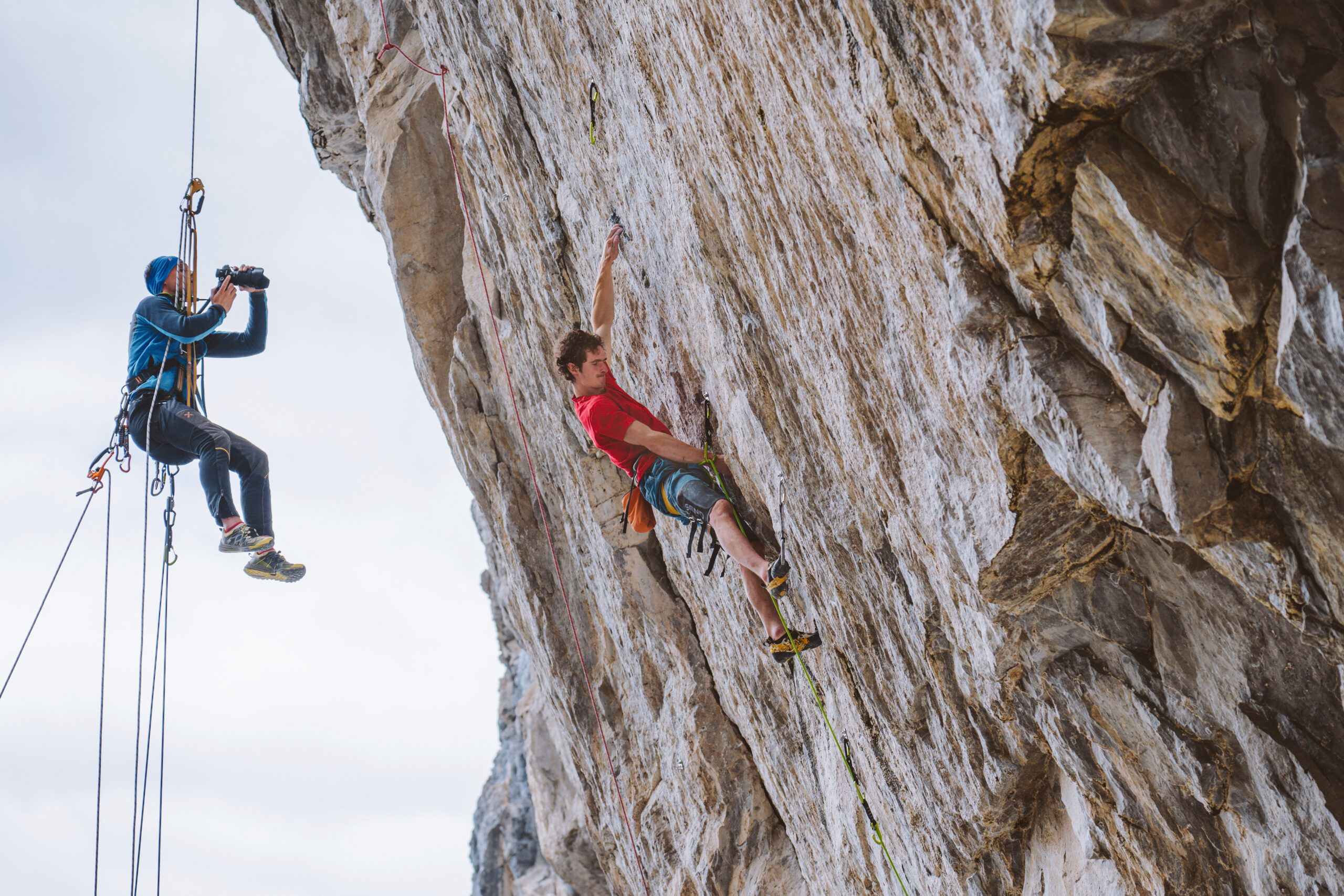
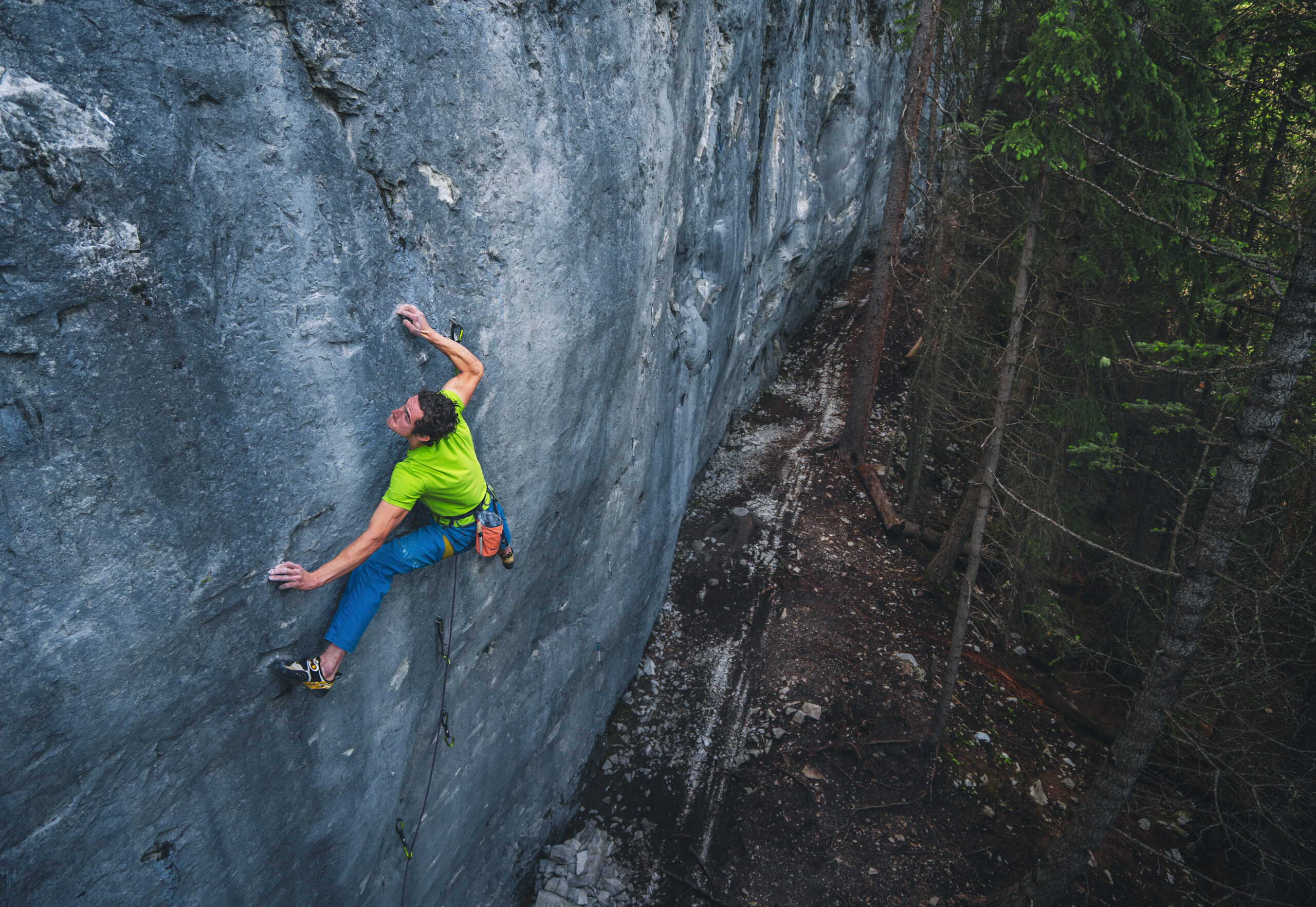
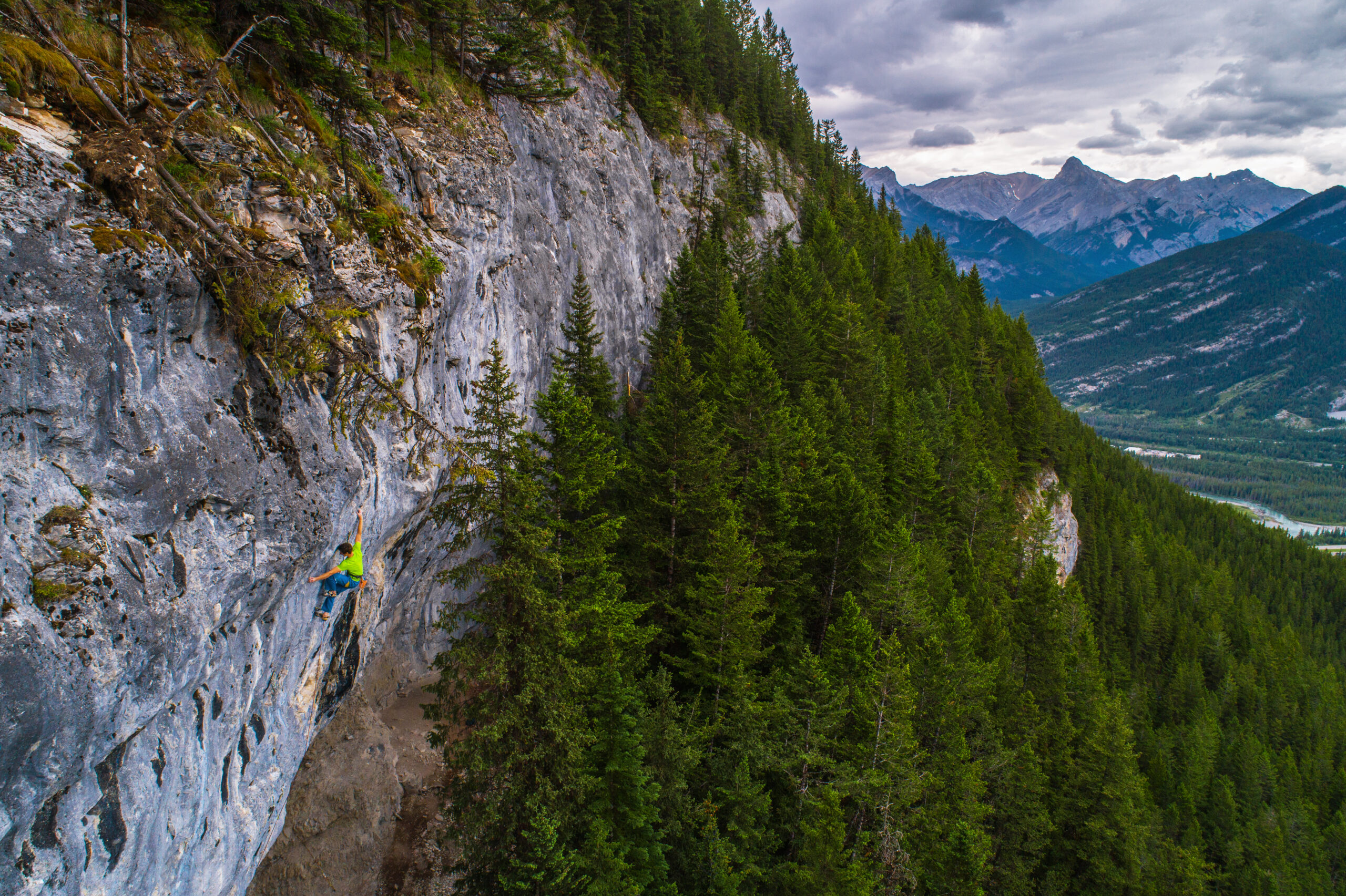
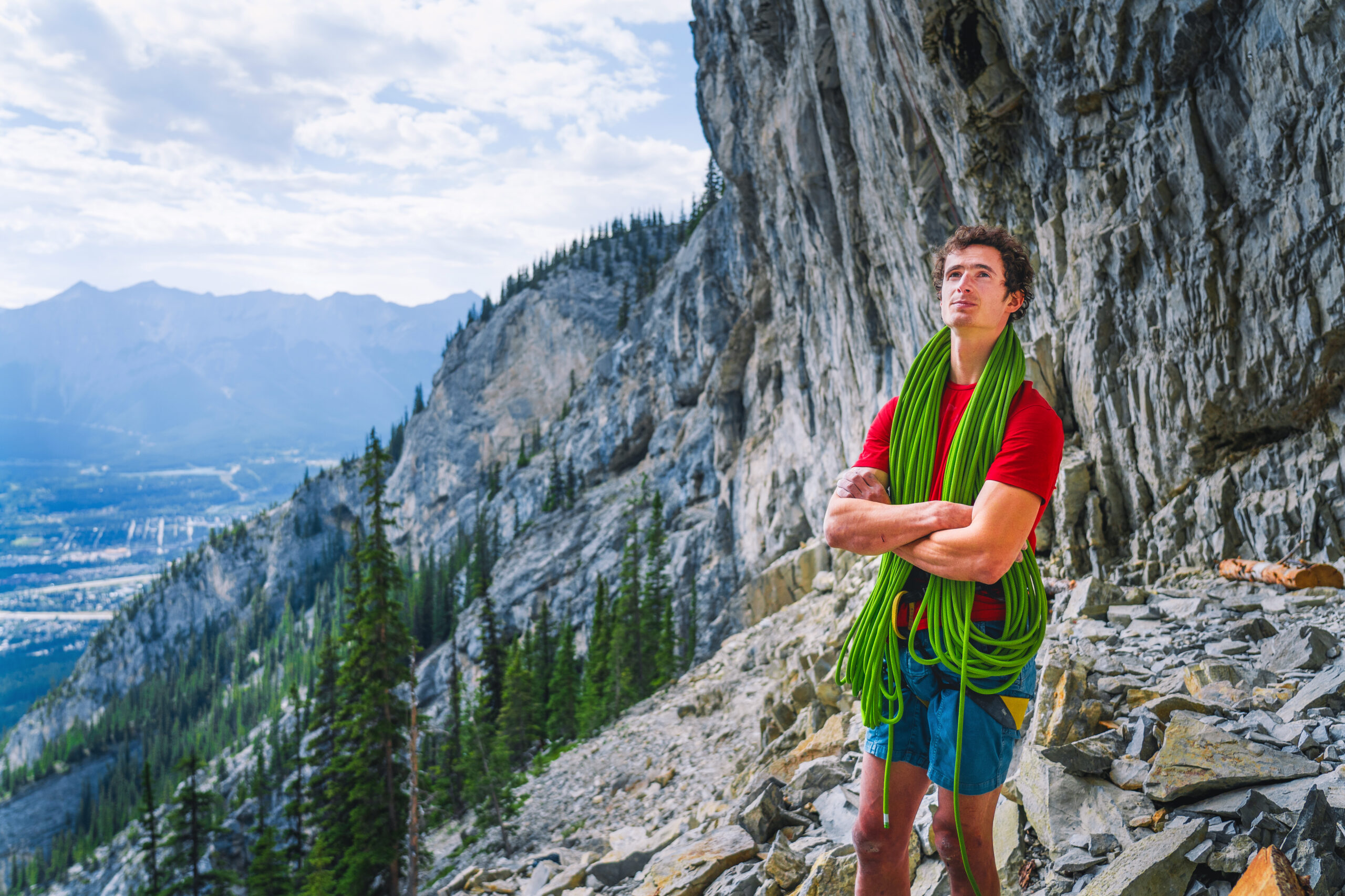
But in spring 2018, my old friend Adam Ondra, widely regarded as the world’s best climber, asked me to rejoin his team as filmmaker, because he started his social media and started to need a lot of high-quality content, they couldn’t find the right filmmakers fit for this back then. In the past we spent almost six years cooperating on countless videos and two very successful feature-length documentary movies. After that I needed a total break from climbing because I was climbing myself, filming Adam, and then endlessly editing climbing films and videos. for many years. I simply needed a break from climbing and that’s where I started with trail running and ski mountaineering in 2015/16. And suddenly in spring 2018 the offer for highly lucrative filming cooperation with Adam was back on the table. The condition was we spend six weeks in Canada filming a demanding climbing film series for brands like Black Diamond, Sony, and DJI. It was too good an opportunity to turn down, so Norway was shelved for the year and I spent summer hanging with my cameras in the ropes in some of the hardest routes of the North American continent and in the evening editing the film series, it was pretty intense but in the end a (long-term) very valuable experience.
One Thing That Was Mine
When I got back from Canada, I needed something that was mine, not someone else’s project or someone else’s dream. Kungsleden trail in northern Sweden made sense, a relatively short 450 kilometre wilderness trail through partly similar terrain to the Norway crossing I had planned, and doable if I moved fast, since the trail’s boat crossings and cabins on Kungsleden shut down after mid-September.
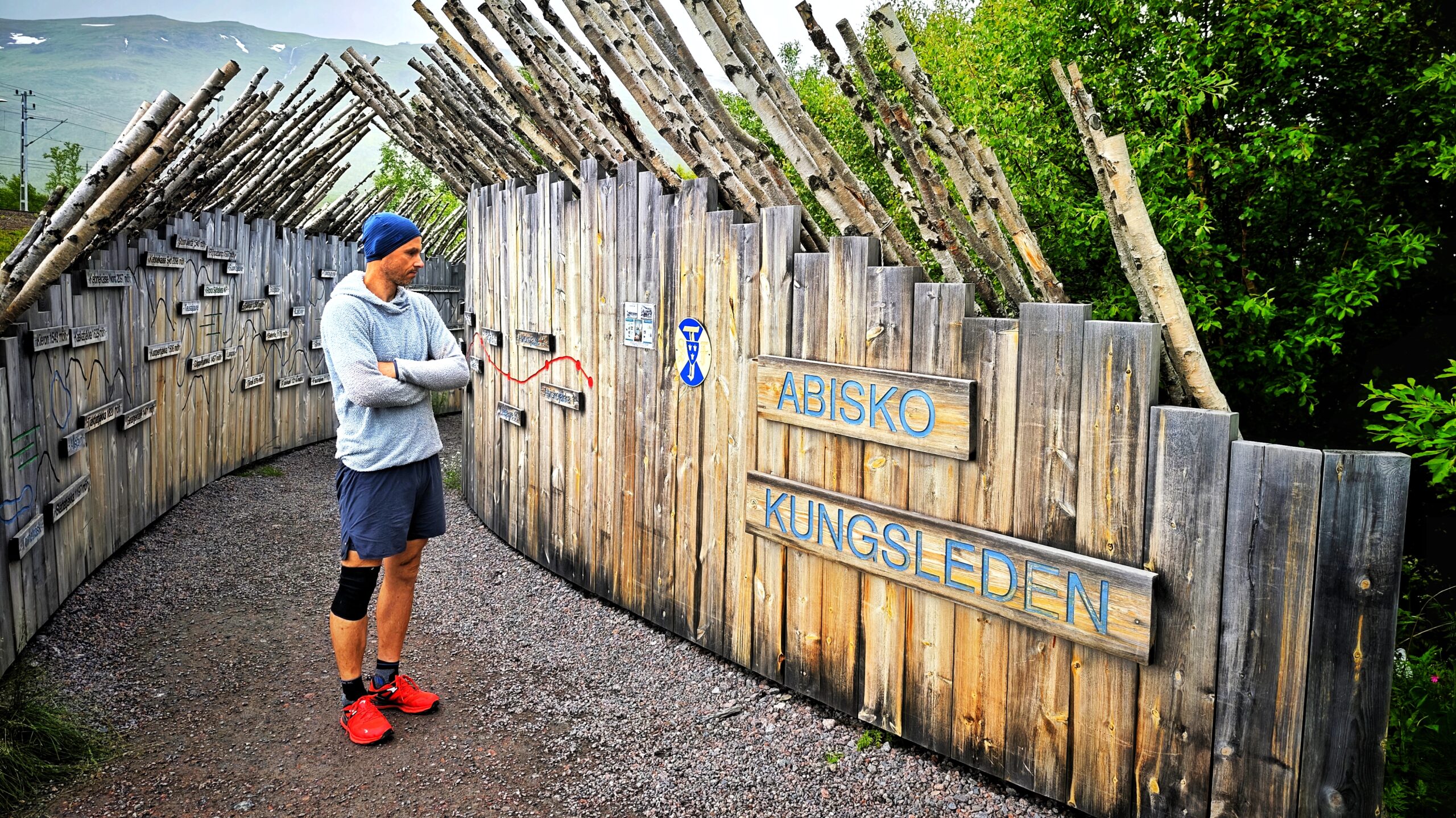
Small self-tracking drones and compact action “360-cameras” barely existed yet in 2018, so if I wanted good running footage, I needed someone else to film running. I knew about a girl named Lenka Vácvalová (today Poláčková). An actress turned into long-distance runner, who’d crossed Slovakia the year before, 550 kilometres on asphalt roads without previous experience, and she seemed to be also crazy enough for an unplanned challenge, like me, so she seemed like a strong fit, confident on camera and physically capable of a such project. I asked her on Instagram, and within days we were filming a short teaser for our Kungsleden project in the mountains of Slovakia. A week later we were driving north to the start of the trail in Abisko, joined by a small support team consisting of her boyfriend Honza Poláček and a close friend of mine also named Lenka Antalová, who was returning south from a summer season in Lofoten.
Heavy Packs, Thin Preparation
I was fully committed to doing Kungsleden “the wild way”, which means sleeping outside in tents rather than in cabins. Therefore I arranged for us very good gear for it. On the way north we got tents directly from Hilleberg headquarters and good sleeping bags from new Czech company called Patizon. But detailed preparation was a bit thin, I honestly admit. I did a small research, watched one big Kungsleden documentary, (where they said that the first stretch to Vakkotavárre was around 90 to 95 km, which in the end turned out to be 110 km), gear packed in a rush, so in the end I carried a genuinely heavy backpack loaded with lenses, a drone, cameras, and food. A 14 kg backpack is totally fine for hiking but not for running 50 km/day in this terrain without the joints and tendons really getting used to it. Now I know it very well, but back then Kungsleden was for me the first multi-day ultramarathon project with a heavier backpack. Muscle-wise and endurance-wise I was really well-prepared from Canada, carrying super heavy climbing and filming equipment every day to the Canadian Crags. But today I know that the joints needed more running preparations. But we had 11 days for the whole trip, so I felt all was totally fine. I knew that we had everything we needed for stopping anywhere needed and sleeping outside and hiking 40-50 km a day was totally doable.
Rough weather
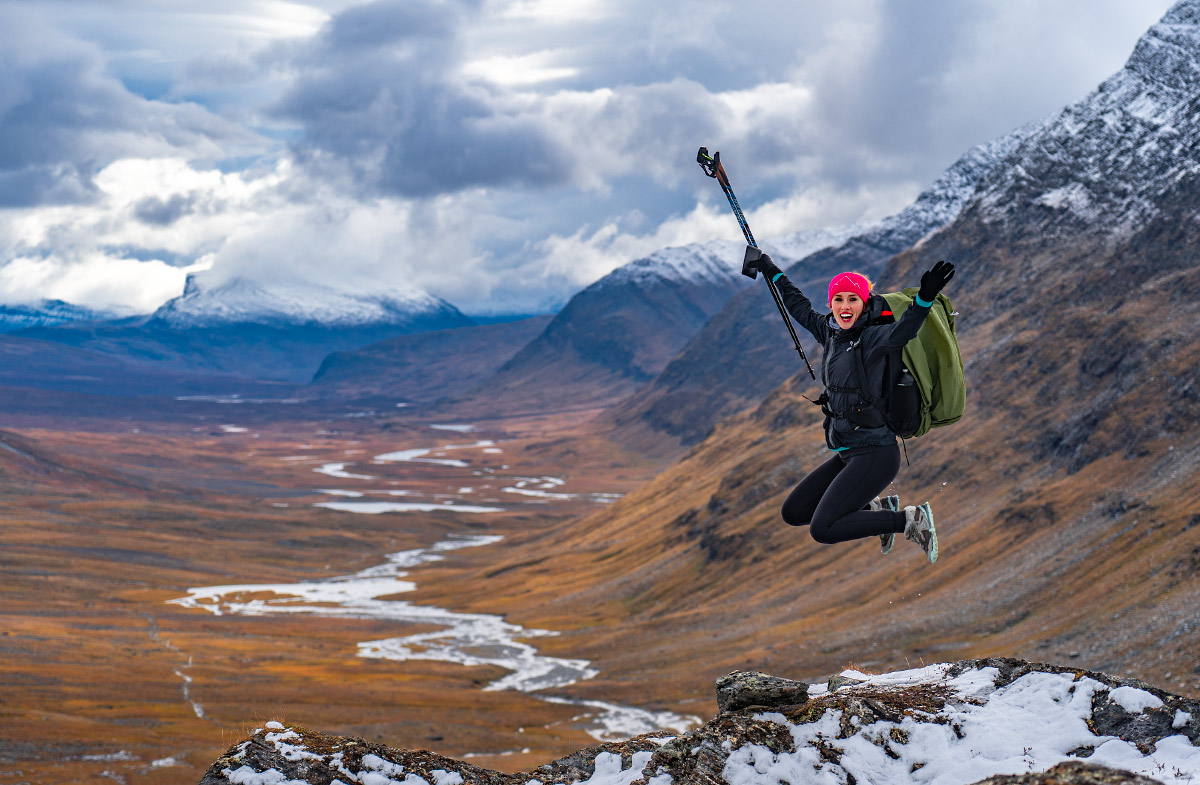
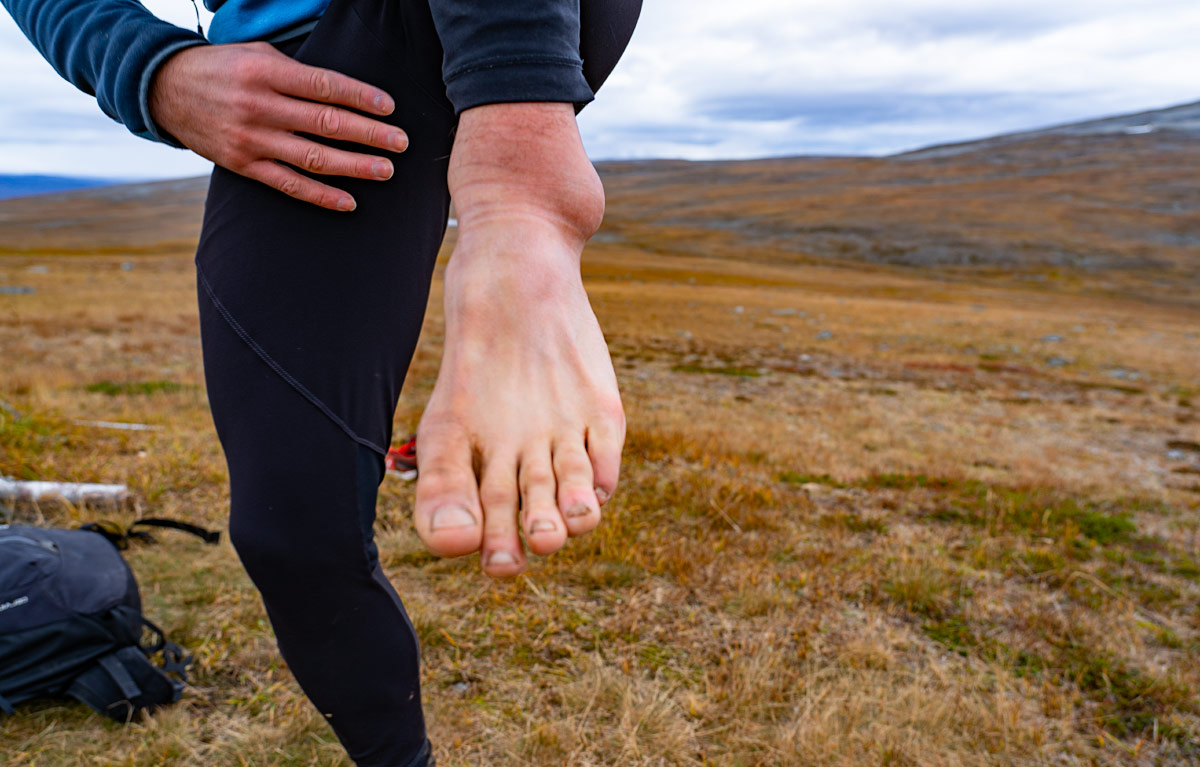
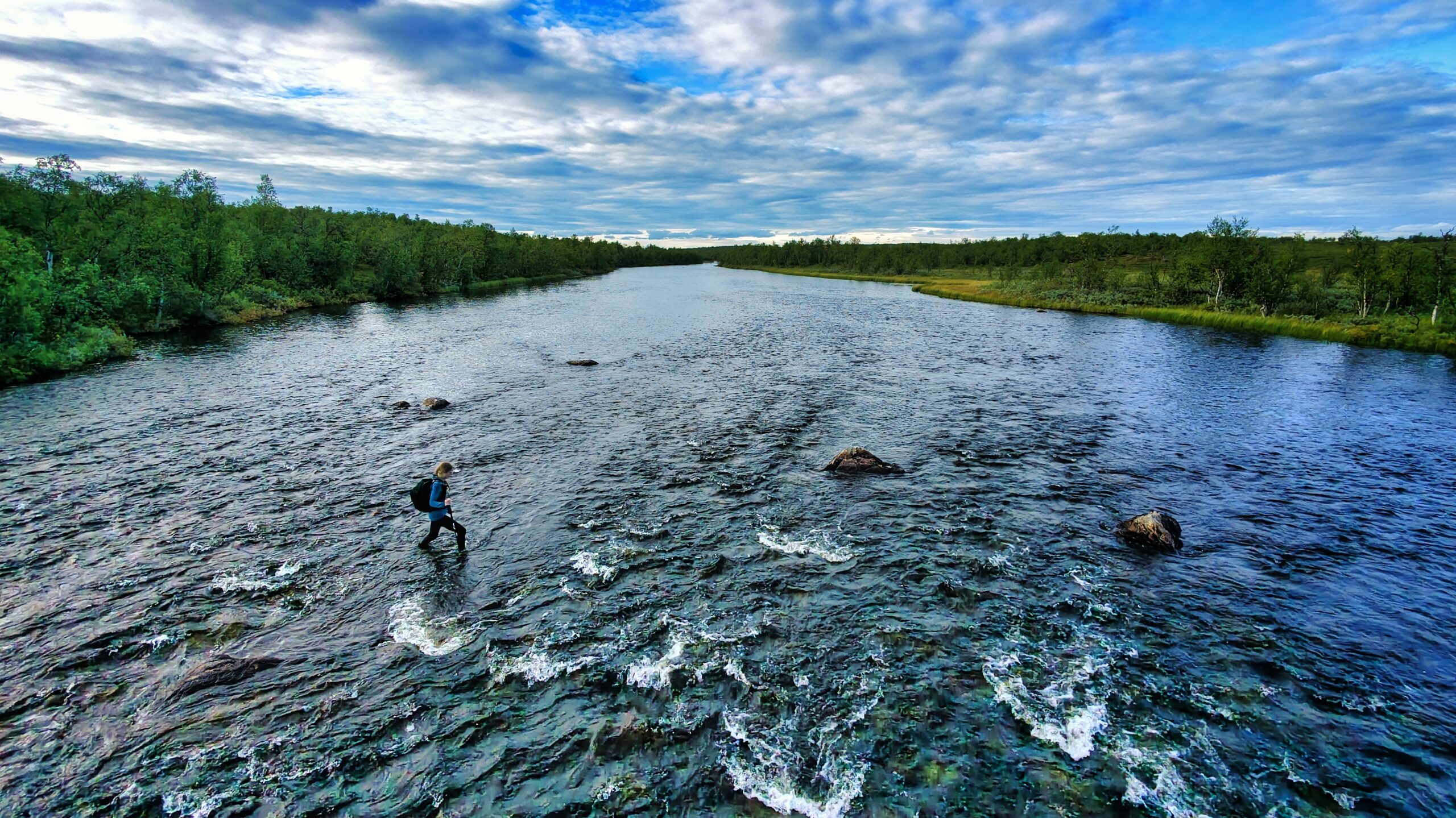
Right after the late afternoon start from Abisko the weather turned cold and rainy almost immediately and stayed like this almost the whole project. For me this was a normal thing. A bit unpleasant, of course, but fine. I already did more than 30 trips to the Arctic wilderness in all year season before but for Lenka everything was new and pretty rough, especially mentally I must say. Which I understood (and now even more) but very soon I was surprised to learn that she didn’t want to sleep outside at all. What!? But it was really cold and rainy the first night so we stayed in the Tjäktja cabins instead. The next day, after we passed the highest point of Kungsleden, Tjäktja Pass, at around kilometer 60, I tripped while filming with a gimbal Lenka crossing a river and twisted my ankle a bit. It felt totally manageable at first, but by roughly 75 kilometres it had stiffened quite a lot. I wanted to stop early that day and rest my ankle to be able to start fresh in the morning. It was a dry evening but she absolutely, and to my surprise quite hysterically, refused to spend the night outside in a sleeping bag and “tarp shelter” as planned. So against my wish and judgement, I pushed on quite painful ankle another 15 kilometres in the dark to the next cabin. When we reached the cabin, I had a really bad feeling and morning proved me correct. My ankle was swollen, stiff, and genuinely totally painful.
From Runner to Support Crew
That was effectively the end of my run. An extremely bitter pill to swallow. I felt really strong but my stupid ankle didn’t allow me to use this power. And honestly also my motivation was gone because without sleeping outside and doing Kungsleden “the wild way”, it was not so interesting film story for me at all, back then. Back then I had no such thru-hiking experience and movie under my belt so I really needed something pretty rough to get enough good sponsors for the main project for the next year in Norge På Langs. At least that’s what I thought.
New plan
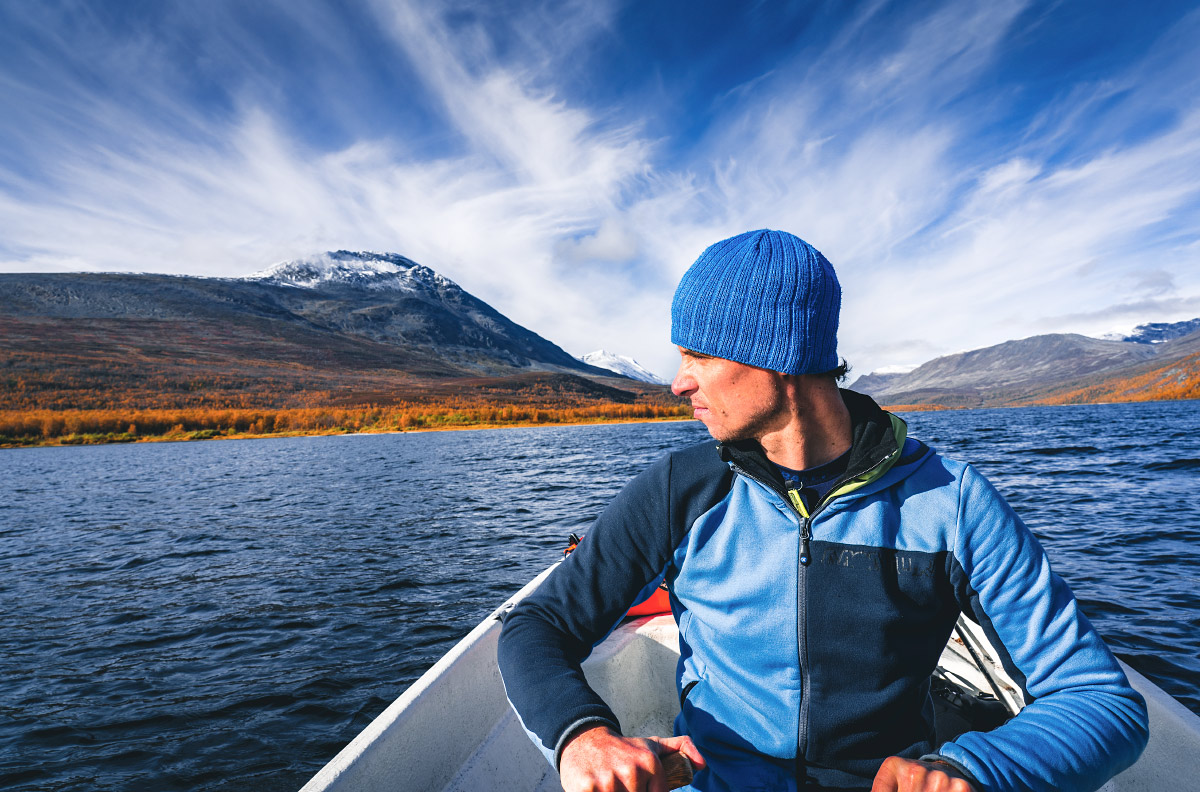
After I rowed us over the first lake, Teusajáure, I told her plainly, “I can’t continue”. Honestly I just wanted to go home. But since we had some sponsors and a lot of people watching this project, and none of us gives up easily, I told Lenka that I could still support the project as crew rather than runner, alongside my friend Lenka A.. And her boyfriend, a super cool and capable guy, Honza, if he agrees, can join her on the run and the project can keep going. And if the ankle recovered a bit after a few days, I’d rejoin her. That’s exactly what happened. She ran on to Kvikkjokk, then to Jakkvik with her boyfriend. After 4 days on intensive healing in the cold waters of the local lakes, I came back in as a runner and filmmaker for the Jakkvik to Adolfstrom and Ammarnas sections. My destroyed ankle gave out again after that 90 km stretch and there was no time left for any healing.
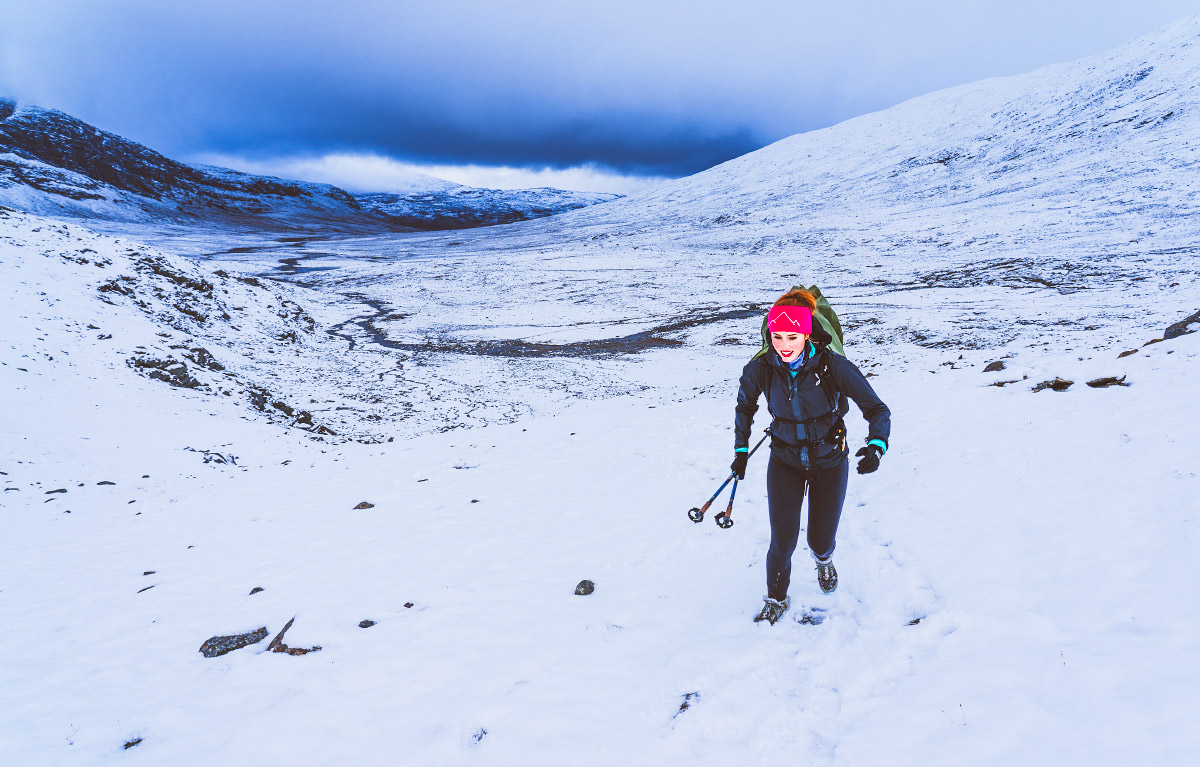
But still the project needed to be done. Lenka and Honza set off for the last stretch from Ammarnas to Hemevan in the morning foggy weather and I must admit that it was pretty tough and dramatic. It was just around zero. It was raining and then later snowing higher in the mountains. It took them two days in pretty bad , cold weather and I must admit that it was a really good achievement for somebody who has never done anything like this before. Hats off! It was a really brutal but at the same time extremely valuable lesson and experience for Lenka, which pushed her comfort limits much further, as the following years have shown she has done a lot of hard projects in the mountains all over the world. But Kungsleden was maybe the most important starting point for her. Her words 😉 Not very pleasant but extremely important and very good.
And for me?
Two Hundred Kilometres, Not Quite Clean
The team dynamic wasn’t great by the end, we haven’t stayed in touch since. Overall I covered a bit over 200 kilometres, roughly half the trail, but not in the style I planned and imagined.
In the end it was not even a clean full Kungsleden. We skipped the final mountain ridge just before Ammarnas and shortened it due to fatigue and time and bad marking in the terrain. So the motivation to edit any movie from this project wasn’t the highest, to be honest.
For me, the real lesson was about preparation and partner selection. You need absolute clarity before you start, on things as basic as whether everyone’s actually willing to sleep outside. I thought I made it very clear and by visiting Hilleberg and Patizon (and getting their products) I thought it was totally clear but reality proved me wrong 🙂 And this created really unnecessary tension and even a “little” argument in the middle of the project after a little mental breakdown. But today I understand it more, it was a really tough first lesson for her, for a girl always wearing perfect makeup no matter the weather or situation 😉 And I also fully realised I needed to train far harder, with real weight on my back, and plan every detail and mental aspect before attempting anything like this again. Because my main goal, “Norge På Langs – The wild way”, was in a totally different league, 7 times longer and in an incredibly harder style and terrain.
Since 2018, I’ve established 2 new long distance trails. The wildest 620 km long trail across the Czech Republic called Zapomenutá Stezka and the most difficult 3000 km long wilderness trail across Norway called Norge På Langs Trail, becoming historically the first person ever who crossed Norway in a clean style purely through the wild nature not spending even 1 km on asphalt roads. 72 days of an incredible hard-to-describe tough and life changing experience.
Now, in late August 2026, I’m returning to Kungsleden. It will be the shortest and technically easiest of these trails, but it is definitely not gonna be easy! This time I’m chasing speed rather than distance, while recovering from a fresh knee injury from a similar project in Slovakia in late June 2026.
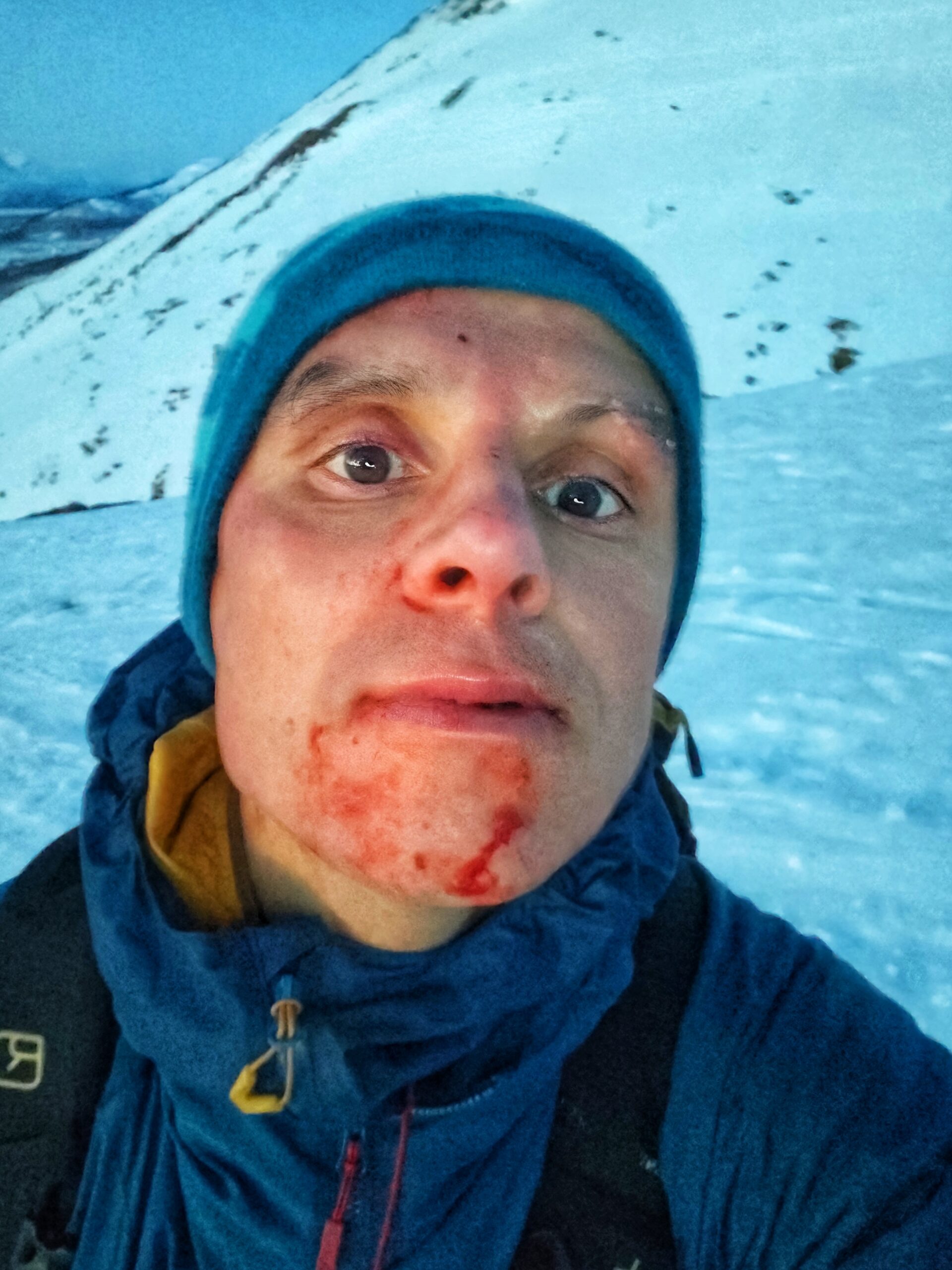
2026 plans were ruined
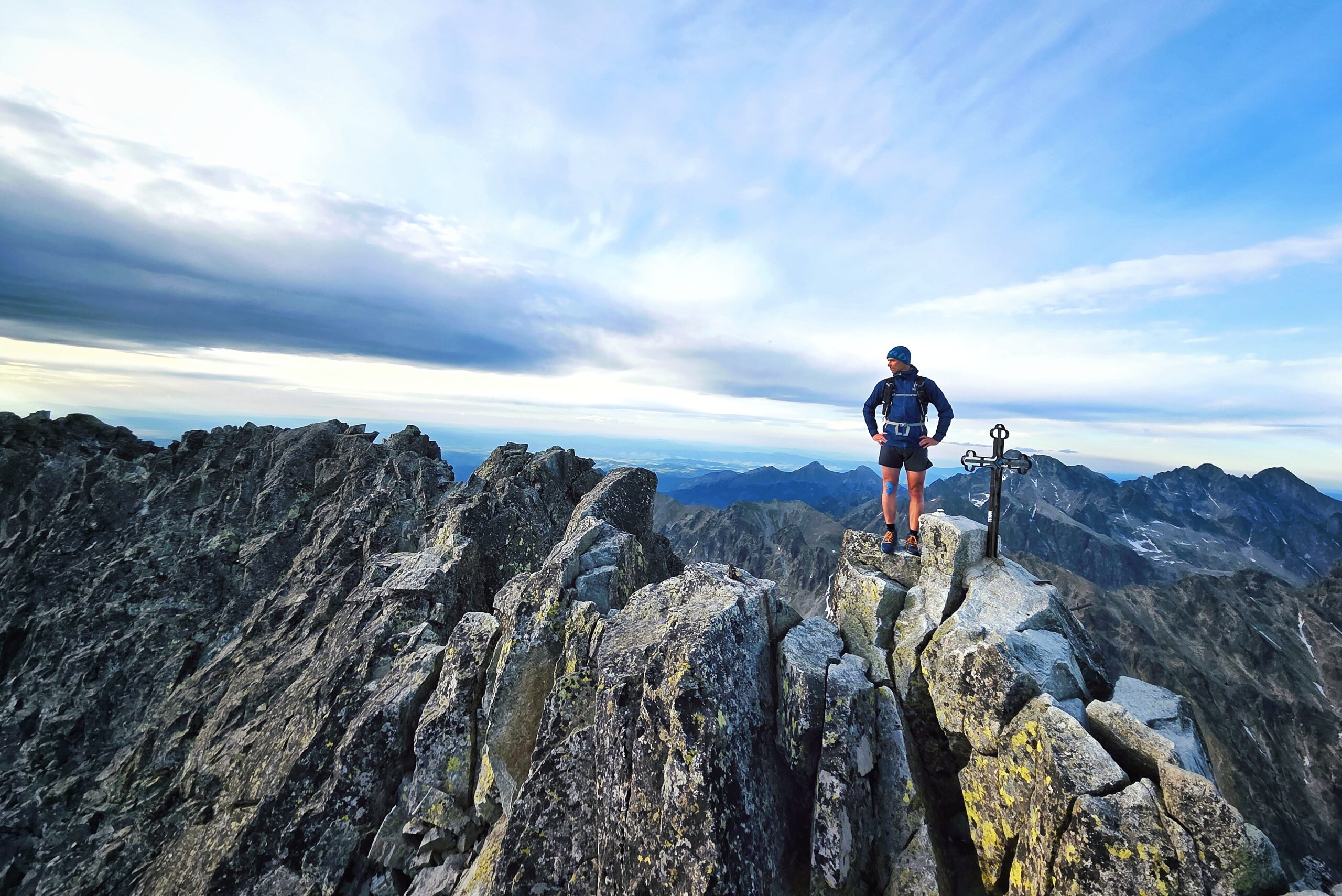
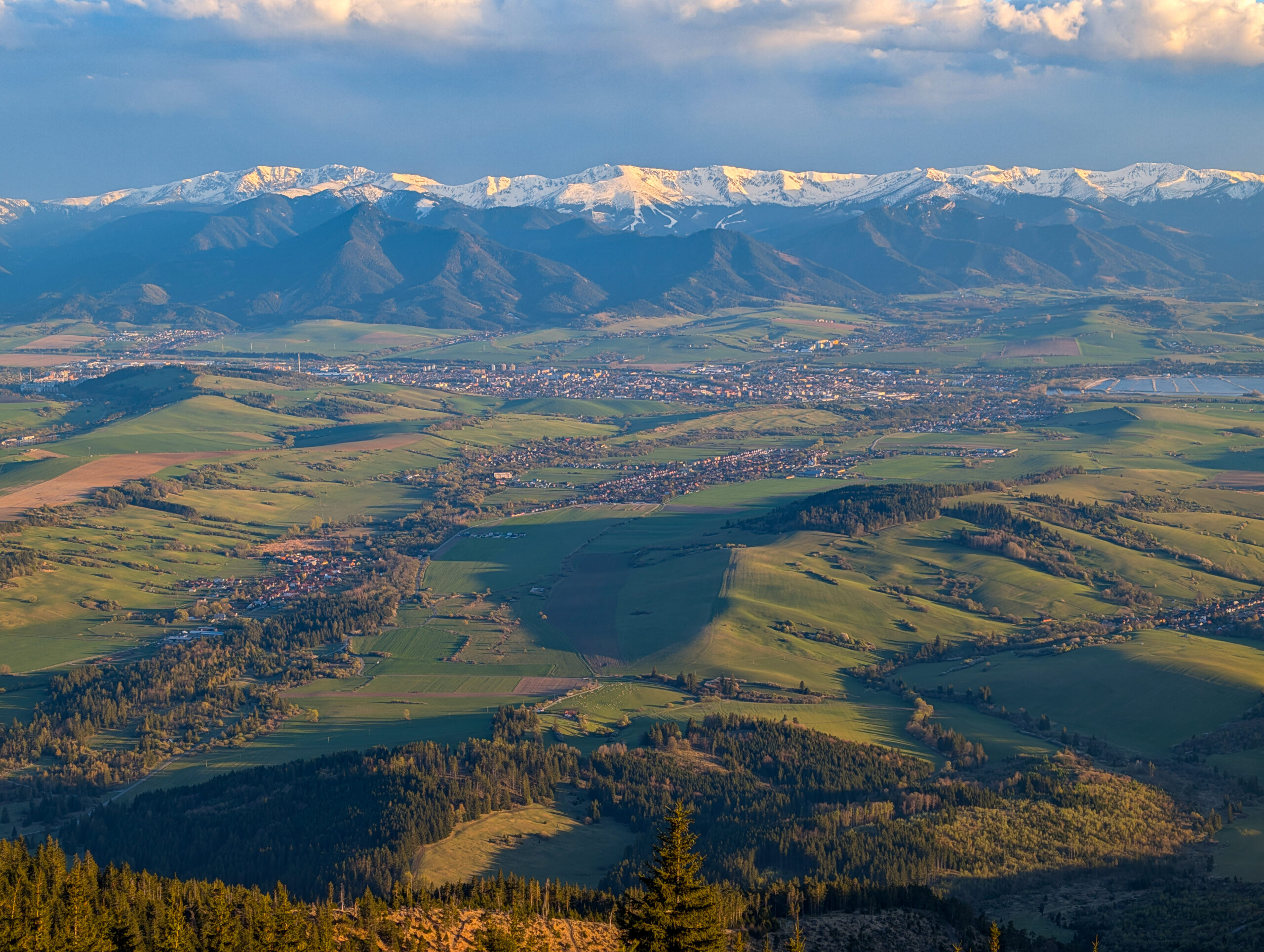
The goal for this year 2026 was clear from the start. We are living in Northern Norway but in April we moved to Slovakia’s Tatras region, where the plan was to train for six weeks in the mountains as much as possible. Then plan was to create a brand new long-distance trail through the Slovak mountains called Koruna Slovenska or in English Crown of Slovakia. The hardest and most mind-blowing logical trail you can establish in the mountains of Slovakia. The first month of training went well, but after running the whole ridge of Velka Fatra at the end of May, I started having serious problems in the MCL ligament of my right knee. Looking back, I realized the injury probably traced to a nasty high-speed fall on skis in the Lyngen Alps back in April, where the bindings didn’t release the skis, I fell on my face and I twisted my leg quite badly. And after weeks of brutal training load in Slovakia, it finally gave out. I could not even properly stand on my leg at all for weeks. Not to run 70 km a day for a week…
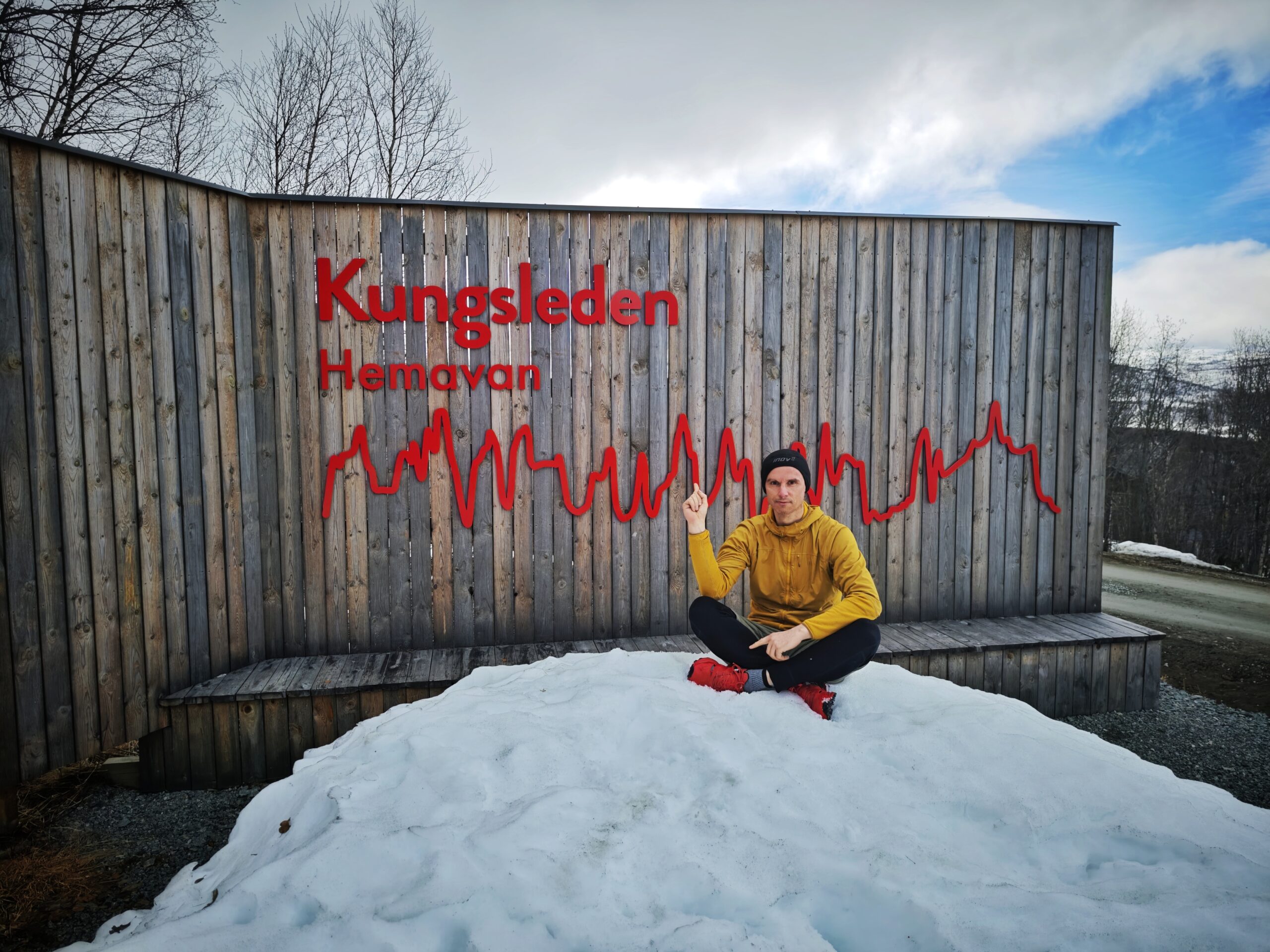
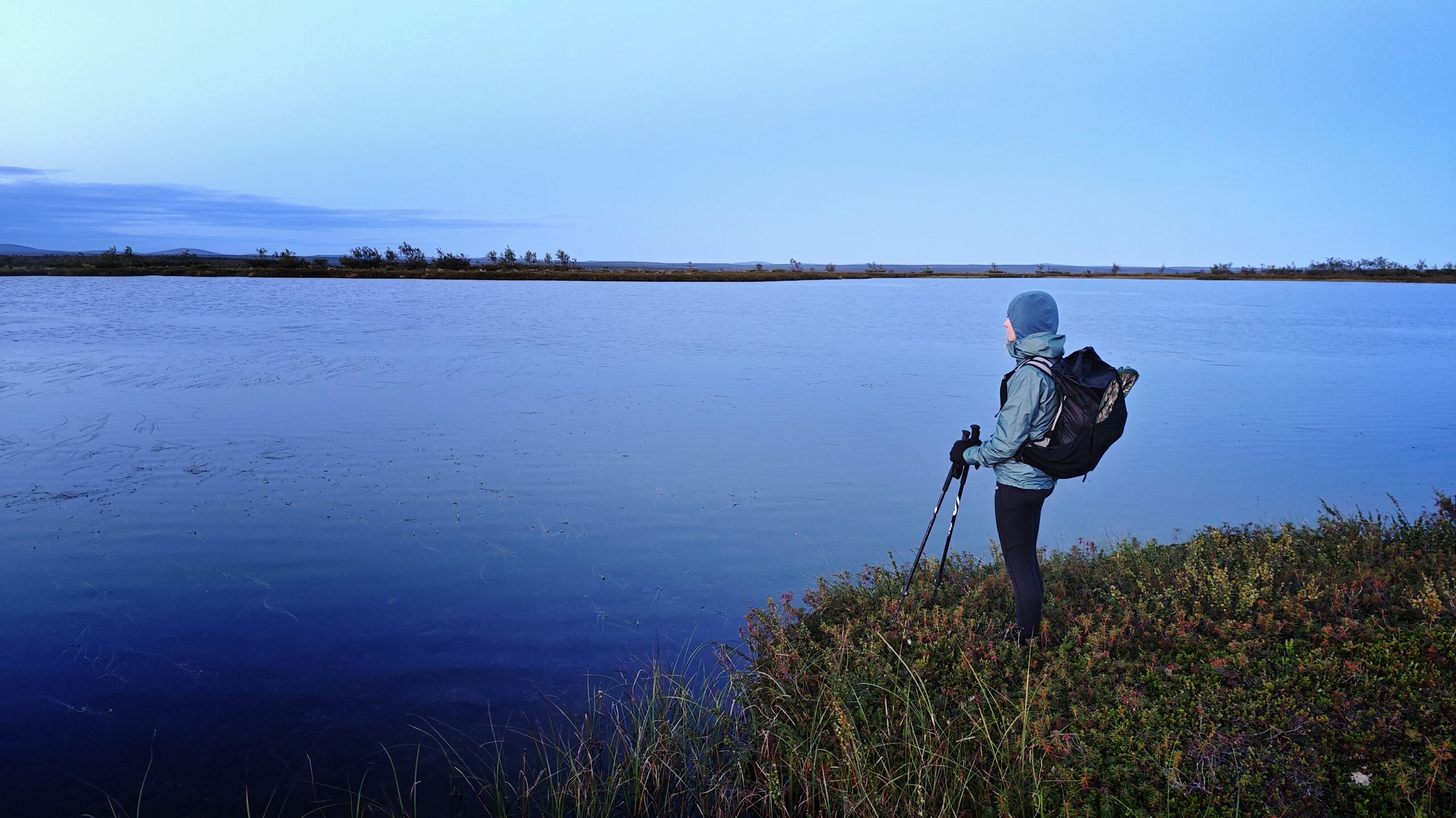
Returning to Kungsleden
I tried to heal it for two weeks, got it to a functional enough state, and started the Crown of Slovakia run project anyway. Unfortunately, after 4 days and 180 kilometres, I was forced to stop completely, a partial tear of the MCL. That ended not just Crown of Slovakia, but the plan right behind it too, since Crown of Slovakia was meant to be the perfect training block for running Kungsleden straight afterward on the way back home to northern Norway. The original goal was to complete Kungsleden in under 7 days.
The injury changed all of that. We came back home to Northern Norway, and this time I fully focused on healing the knee properly. We did a lot of smaller and later even bigger trips but the knee never felt fully solid. The MCL side seemed fine after a month, but ironically the other parts of the knee felt really weird and somehow displaced. Gradually it was possible to run more and more. It’s in a much better state now, two months after the injury, proven by 2 day and 117 kilometre push across one of the most remote parts of Norway, the Finnmarksvidda plateau, with Stina last week, carrying a 14 kilo backpack. The knee held up, but I couldn’t train properly for almost two months so this trip clearly wasn’t enough to get back to full fitness. The original goal, before the injury, was to complete Kungsleden under 7 days. Now, the aim is simple. To finish within the 9 days we have! I feel very committed to give my best but if the knee or some other part of the body won’t cooperate fully, I won’t be disappointed. We did the maximum we could to make it happen this year.
That 2018 Kungsleden, messy as it was, ended up opening a circle I didn’t fully understand back then. Well, let’s see if we will be able to close it this time…